|
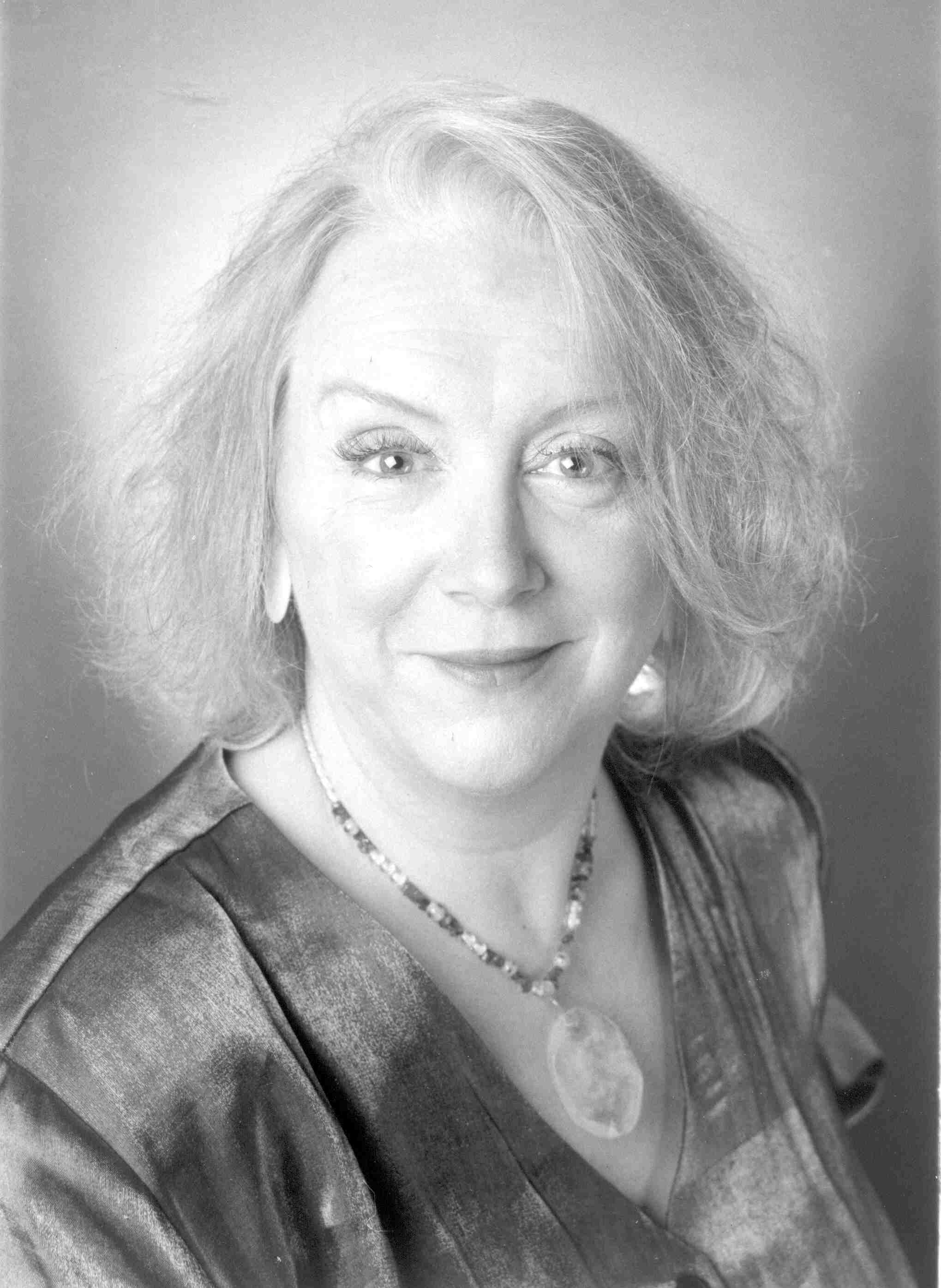
"It's not who you are that holds you back, it's who you think you're not." Hi! My name is Vikki Flawith
and I am the Shy Singer. |
|
About Vikki ~ Testimonials ~ Gentle Beginnings ~ Contact Vikki ~ Return to Index |
|
VOICE LESSONS Long to Sing, but Too Shy to Try? Wish you had a Better Speaking Voice?
I like to work with students those who are over the age of 18 years old, who are
serious about developing their vocal abilities, and who are committed to
exploring the creative process through singing or speech. I particularly enjoy working with
beginners and/or mature students.
It doesn't matter if you can't carry a tune (you will), if you're so soft-spoken you are constantly being asked to speak up (your voice will grow), if you feel your throat tighten up when you go to sing or speak (you will be more relaxed), if you wish you could be more confident on stage (you will gain skills and knowledge that will help you feel more prepared).
I've got this idea that, if you've come here to this website, searching for a solution to your vocal problem, if you have a wish deep within to sing freely or speak your truth more effectively, then there's a reason you are here. All of us learn to talk, but no one really teaches us to use our voice correctly for health, beauty and longevity.
Most of us are introduced to singing at a young age, often a negative experience at that time dictates our feelings about singing for the rest of our lives. Isn't that sad?
About 50% of the human population is wired as Introverted. We're sensitive to our surroundings and find it difficult to dig deep and let our voices speak well for us.
Lesson fees are listed on this page - scroll down.
PLEASE feel free to email me at shysinging@gmail.com for information and/or to be placed on my waiting list. I can't tell you how meaningful it is to me that so many wish to become a student of mine, the journey we take together is so special, I am endlessly grateful for the trust you give me when sharing yourself and your voice in the studio. Every story touches my heart, and it is terribly hard to ask those who desire to work with me to wait, but I regret to say the number of students I can work with is extremely limited. I would be very happy to put you on my waiting list. But please know that I can only wait for someone who is with me now to leave before offering that day/time to someone else, and it's impossible to predict when an opening will occur. I do very much appreciate your interest & hope that we can meet soon! :) **UPDATE 2022 - due to COVID-19, all lessons are now Online only (Zoom).
I call myself "the shy singer" because that is precisely who I was and am. I have grown from the place of acute social phobia and extreme stage fright into the person I am today... and I attribute this personal growth to the study of singing. As I began to become aware of the things that inhibited my voice... I saw these same things inhibited me in life. The process of finding & releasing my authentic voice became also the process of finding and freeing my Self. These days, we have art therapy, and music therapy... in my studio, we have 'voice therapy.' |
|
MY PHILOSOPHY In my studio it is my aim to combine these ideas: -that to be whole singers and speakers we must be willing to look at the self-beliefs, inhibitions and habits that effect our growth... students often find this journey mirrors their life journey; -that the voice only grows and develops when you water it with positive thinking and conscious practice; -that a good understanding and usage of technique will help all voices to blossom; -that anyone who is willing to do the work can be helped to sing and strengthen their voice. I firmly believe that a knowledge of vocal technique is essential to all vocalists, no matter what kind of music they sing, be it pop, rock, jazz, country, Broadway, classical or opera. I myself enjoy singing a variety of music in all kinds of genres. "But I don't want to be an opera singer, or even sound like one," many aspiring pop/country/jazz vocalists say, "and why should I have to learn technique? Why should I sing scales and exercises?" Quite simply, because the trained voice is immediately recognizable. Because the trained voice is healthier, more robust, has a well-developed range, and can sing a variety of music easily. Vocal health is critical for the professionally-aspiring singer. Incorrect singing -- ineffective breathing, unsteady tones, forcing high notes, pushing to project -- can cause irreparable damage to your irreplaceable vocal chords. Good technique is essential for continued success and longevity. |
|
Why I teach what I teach the way I teach it :) My maestro used to tell me that folks would graduate from the vocal department from the local university... and then come to him to really learn how to sing. At that time I met several 2nd & 3rd year university students who were taking a voice major at school - and they were already teaching lessons to other singers even though they hadn't even finished their degree yet! Just think, a student, with no professional performing experience, passing on... their second year knowledge. Maestro also used to say that there are many many vocal coaches around, but only a few really know what they're doing. I hope he's up there somewhere, looking down on me with approval, lol. I personally studied privately for 6 years before I even started thinking about teaching -- two lessons a week, plus working with a pianist, plus coaching with a woman who had worked with some of the top line singers in the world (Pavarotti, Domingo, Bartoli), had been an assistant conductor at places like the Met, & who had herself studied with Callas's teacher (by the way, she was one of the most humble people you would ever meet - and only charged $40 an hour for her services - unreal). All of this training was 'bel canto' or 'the Italian method'. I continue to train now -- so it's been 22 years of training, and 16 years of teaching. The reason I teach the technique I teach is not just because it's what I was taught, but because it worked for me. It helped me unblock myself, get away from pushing & belting, grow my range, helped me understand that good, healthy singing is effortless. But more than that. I've seen it work with every single person who has walked into my studio.
I've seen it work with a gentleman who only had one functioning vocal chord, and who was told by his doctor to take singing lessons. I've seen it work with someone who only spoke with a rasp - no tone - her voice was so damaged - and within 3 months, she was singing, and speaking, with tone in her voice. I've seen it work with people you would write off as being tonedeaf and totally, absolutely, beyond help. I've seen it work with folks who are so shy they can barely croak a note... and it works, every single time. I believe it works because it is based on the idea that the body already knows how to sing, and you have to learn how to get out of the way. It's based on the idea that we sing with breath, vowel, and 'right-thinking' rather than manipulation, muscle, driving. Along with the technical principles - which are, of course, important - I also discuss the psychological aspects of singing and performance. I think any method that deals with mechanics only and doesn't address the fact that the voice is part of our human identity, or the fact that our self-image is reflected in the sounds we create, is leaving out a very important aspect of singing and speech. In other words, I belive that 'technique' and 'method' must also embrace, support, encourage, and reveal the artistry & spirit of the student. One of the things that I think is really cool about the technique that I know, teach & believe in.... is that it comes to my students through an "oral tradition", passed on from teacher to student from the time when some of our most beloved composers were still alive. Maestro Luigi Wood, my teacher, who was vocal coach to Vancouver Opera, studied with the Italian baritone Mario Basiola, in Italy. Basiola studied with the great baritone Antonio Cotogni, who grew up in Rome during the golden age of bel canto. Cotogni sang for Rossini and Donizetti, but was also considered to be the greatest baritone of the Verdi repertoire. In his later years he became one of Italy's most famous singing teachers; tenore Beniamino Gigli was also one of Cotogni's many well-known pupils. That being said, if you are really passionate about beginning an operatic career, I would suggest perhaps studying with me for a few months only, and then moving on to the Conservatory or university voice departments. You will need training in diction, repertoire, movement, etc., that they are best equipped to provide. |
|
LESSON FEES All lessons are one-on-one on Zoom.
LESSON FEES:
THREE 1 HOUR Lessons per month:
FOUR 1 HOUR Lessons per month:
It's 30-35 minutes of breathing & very gentle vocalizing, and
about 5-10 minutes of discussion.
Note: all prospective students are asked to attend a FREE meeting |
|
Embracing the Creative Process of Living In our society, we seem to deny that there is a process to becoming, we seem to think a) folks are born with it, and b) they just arrive. But the truth is, for most people, artistry is a journey. I'm afraid that the Idol shows and the emphasis on youth in the music industry is in direct opposition to the truth of how a human being becomes a real artist --- it takes time, experience, perseverance. You love it, that's why you do it - not for fame or fortune - but because you can't imagine doing anything else. Because it touches something deep in your soul. Because it challenges you to change and grow... and let your light shine. |
|
About Vikki ~ Testimonials ~ Gentle Beginnings ~ Contact Vikki ~ Return to Index |
|
READ MY CREATIVE JOURNAL: |
|
A GREAT OBSERVATION: "Outstanding performers are not trying to win. Those people are allowing the action to flow, totally in the moment. Their competition is more like a meditation than a contest. They are in harmony with their body and mind." (Dr Wayne Dyer, "You'll See It When you Believe It") |
|
(c) 2002-2023 V.L. Flawith (Socan, Ascap) |